
Belém, Brazil – Hu Jingnan, a research professor from the Chinese Research Academy of Environmental Sciences (CRAES), participated in the 30th meeting of the Conference of the Parties (COP30) to the United Nations Framework Convention on Climate Change (UNFCCC) from November 9 to 22, 2025 in Belém, Brazil.
Dr. Hu actively contributed to the negotiations on technology development and transfer, which stands as one of the key topics under the UNFCCC. Throughout the meetings, he voiced China’s stance, helped uphold the shared interests of developing nations, and encouraged negotiations to proceed on a more equitable and collaborative track. His participation was backed by the Department of Climate Change and the Department of Science, Technology and Finance of China’s Ministry of Ecology and Environment (MEE).
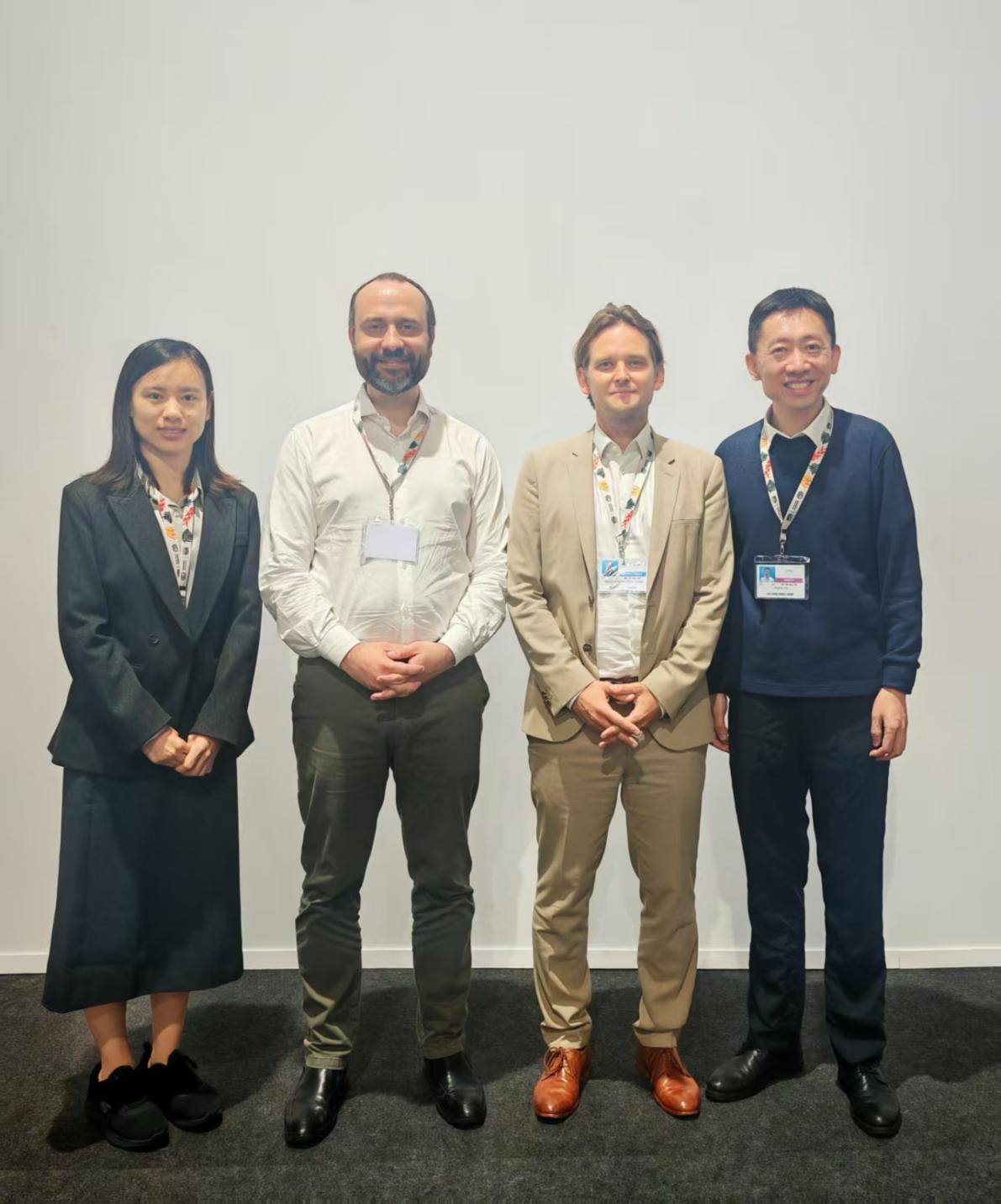
Group photo of Chinese delegates with representatives from the COP30 Presidency (Brazil) and the UNFCCC Secretariat on technical issues.
Since a shared understanding of climate technology issues at the global level was initially formed in 1995, technology development and transfer has achieved several key milestones: the 2001 Marrakech Accords established a technology transfer framework; the 2010 Cancun Agreements set up the Technology Executive Committee (TEC) and the Climate Technology Centre and Network (CTCN); and the 2018 COP24 in Katowice adopted the Paris Agreement Technology Framework, among others. Technology cooperation remains a crucial pathway for strengthening countries’ capacities to tackle climate change. It also serves as an essential platform for China’s engagement in global climate governance and for advancing a fair and rational system of international cooperation.
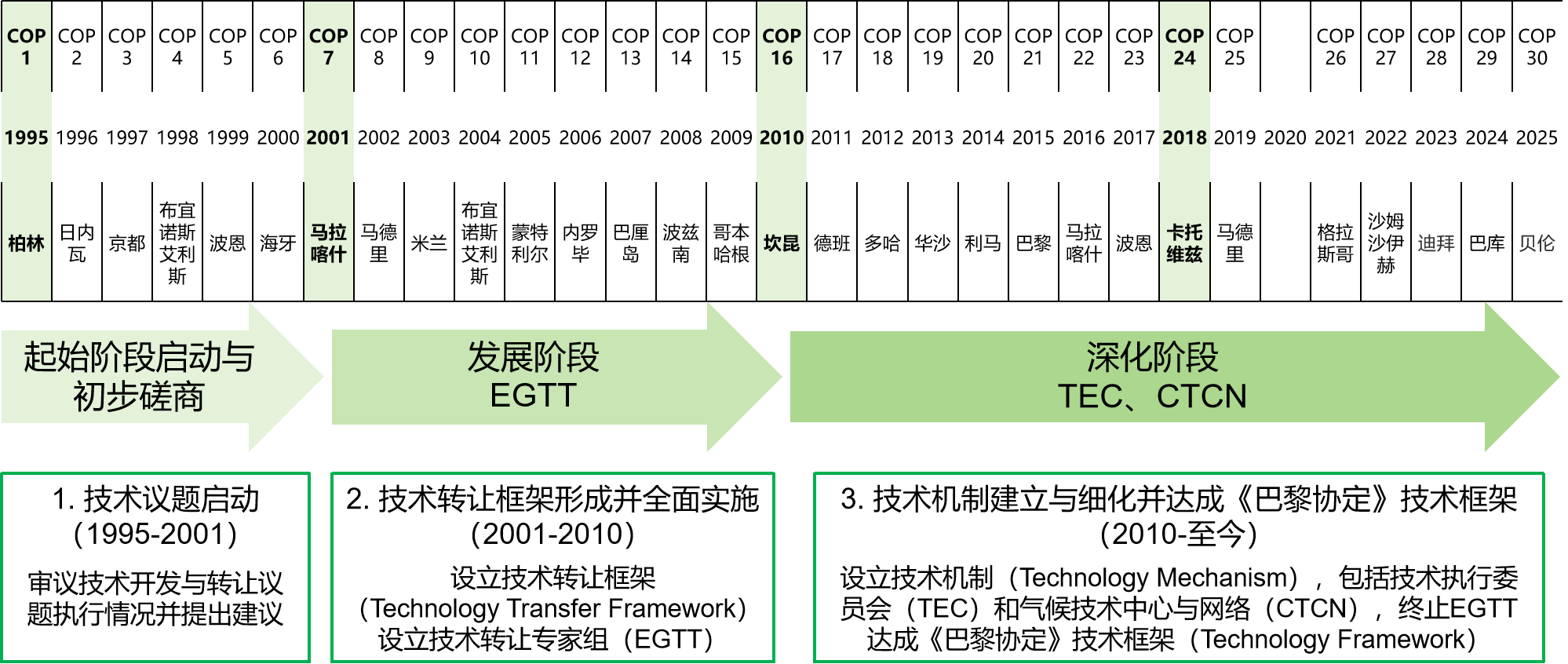
Timeline of Key Developments in Climate Technology Negotiations
The technology track at COP30 featured four core agenda items: the Technology Implementation Programme (TIP), the review of the Climate Technology Centre (CTC) functions, the Linkages between the Technology Mechanism and the Financial Mechanism (Lingkage), and the Joint annual report of the TEC and CTCN (JAR).
During the conference, representatives from all Parties engaged in in-depth consultations on these items and achieved positive outcomes: Consensus was successfully reached on the review of the CTC’s functions. The Centre’s operational period will be extended for 15 years. In addition to retaining its current roles, the CTC will now provide support to developing countries’ National Systems of Innovation (NSI) and National Designated Entities (NDEs), with enhanced requirements for fund mobilization capacity. New host selection criteria have also been introduced, with the process scheduled for completion in 2026. As part of the Belem Climate Conference outcomes, the TIP outlined a framework to advance the development and transfer of climate technologies to developing countries over the next decade. A series of global and regional dialogues on the Technology Mechanism will be organized in 2027–2028. However, no consensus was reached on the Linkage and JAR agenda items. These will be carried over for further negotiations at the Bonn Climate Change Conference in June 2026.
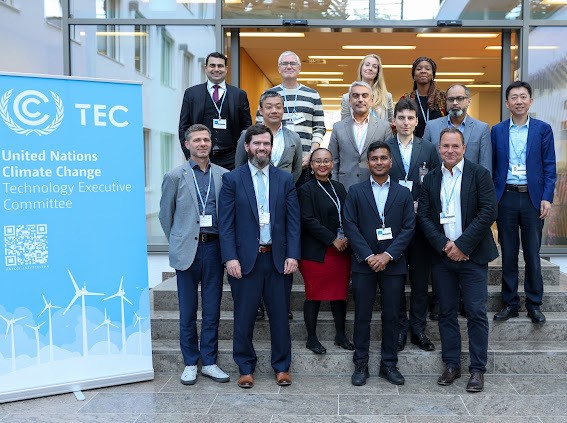
Group photo of the TEC
In recent years, Dr. Hu Jingnan, a senior researcher at CRAES, has served as a technical topic expert, participating biannually in the TEC meetings and the TEC-CTCN Advisory Board Joint session. He has contributed to the review of TEC’s annual progress and kept abreast of the latest developments under the Technology Mechanism, providing critical technical input to support climate technology negotiations.
Dr. Hu has also led his team in active engagement within multilateral platforms such as the G77 and China, the Like-Minded Developing Countries (LMDC), and BRICS, participating in internal seminars and promoting technology development and transfer cooperation among developing nations.
Moving forward, CRAES will continue to deepen its involvement in TEC-related work, closely monitor updates under the Technology Mechanism, and provide sustained, professional technical support for China’s participation in international climate change negotiations.
