
Urumqi, Xinjiang – 26 June 2026 — The First Meeting of the Dialogue Mechanism among Leaders of China-Central Asia National Research Institutions (hereinafter the “Dialogue Mechanism”) was held in Urumqi, Xinjiang. Dr. Quan Zhanjun, Vice President of the Chinese Research Academy of Environmental Sciences (CRAES), attended the meeting and signed the protocol for new member accession, formally marking CRAES’s entry into this regional cooperation platform.
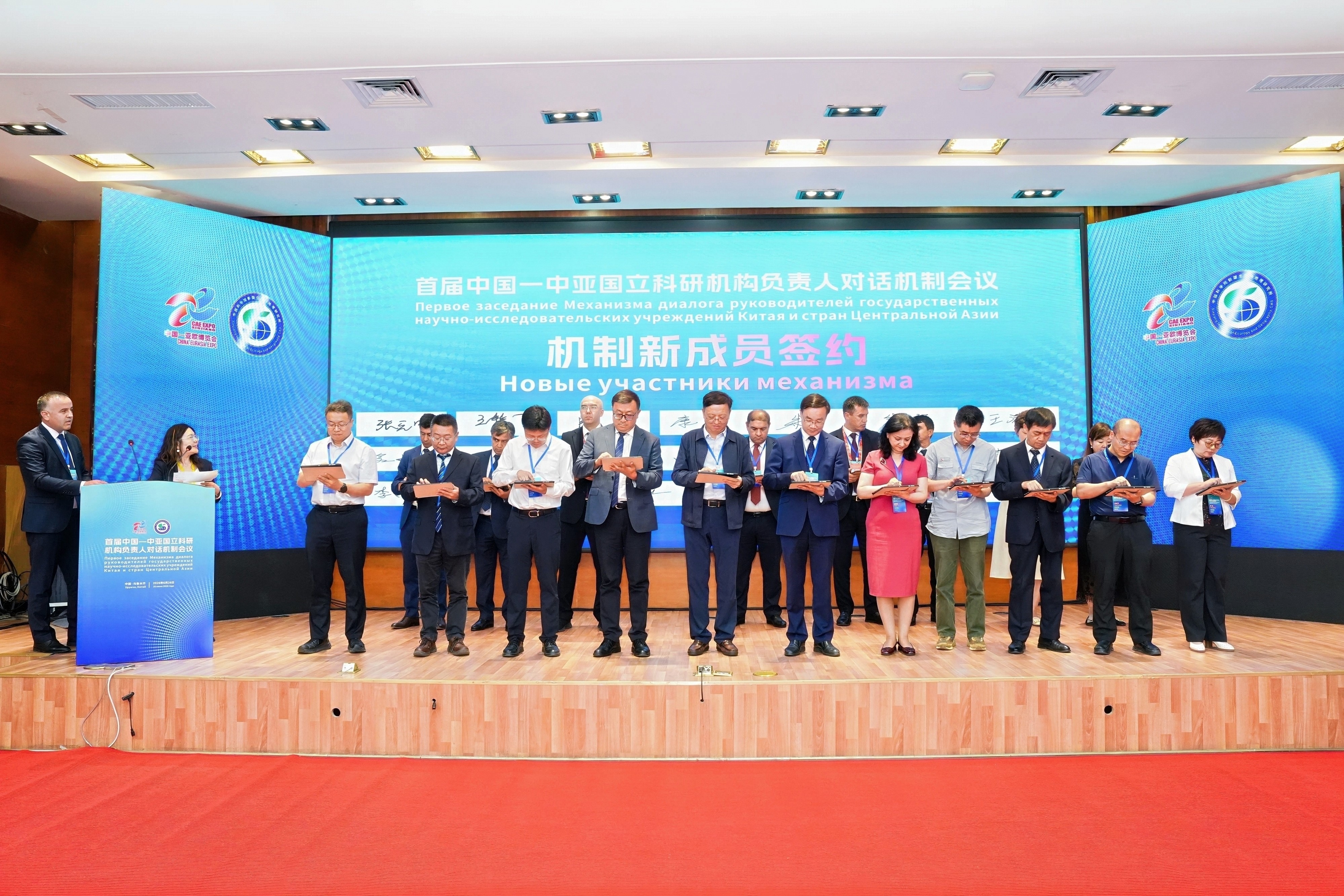
Co‑initiated by 28 national research institutions from China and Central Asia, the Dialogue Mechanism is a key follow‑up action to the outcomes of the first China‑Central Asia Summit and the Third Belt and Road Forum for International Cooperation. It is designed to establish regular exchanges among institutional leaders and scientists, foster collaborative research, and drive scientific and technological innovation across the region.
As a “national team” and “pacesetter” in ecological and environmental research, CRAES boasts a high-level talent pool represented by academicians and recipients of the National Science Fund for Distinguished Young Scholars. It has built a comprehensive disciplinary system covering water, atmosphere, solid waste, ecology, and other fields, and, relying on a number of national and ministerial key laboratories, has formed a full-chain research support platform spanning from basic research to the translation of achievements into applications. At the same time, CRAES has long been deeply engaged in eco-environmental science and technology cooperation with countries along the Belt and Road, accumulating rich experience in areas such as regional environmental governance and the collaborative promotion of green technologies.
Going forward, CRAES will leverage the Dialogue Mechanism to deepen collaboration with Central Asian partners in several priority areas, in alignment with China’s national strategy for high‑quality Belt and Road cooperation. These include coordinated governance of the water–food–energy–ecosystem nexus under climate change, ecological security in arid regions, biodiversity conservation, and the sustainable use of water resources. Through these efforts, CRAES aims to expand its international research network, accelerate the practical application of scientific outcomes, and contribute to building a closer China‑Central Asia community with a shared future—elevating regional green and low‑carbon development and global environmental governance cooperation to a new level.
