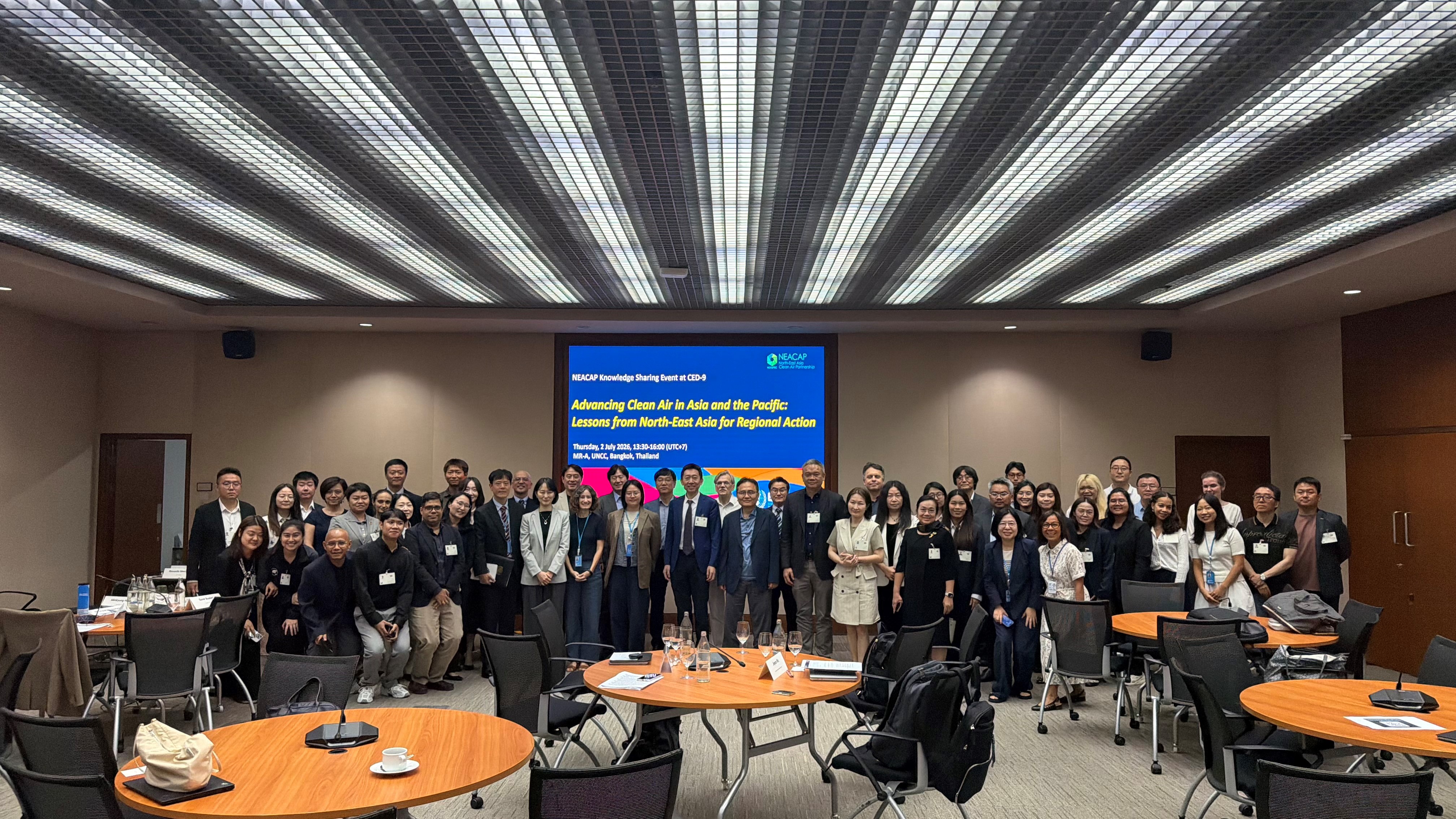
Bangkok, Thailand – 2 July 2026 — A side event titled “NEACAP Side Event at CED-9: Advancing Clean Air in Asia and the Pacific: Lessons from North-East Asia for Regional Action” was held during the Ninth Session of the Committee on Environment and Development (CED-9) of the United Nations Economic and Social Commission for Asia and the Pacific (UNESCAP). The event aimed to strengthen policy, strategy, and technology exchanges on air quality management across the region, enhance stakeholder awareness and collaboration, and promote both regional and subregional cooperative efforts.
Co‑hosted by the Chinese Research Academy of Environmental Sciences (CRAES), the National Institute of Environmental Research (NIER) of the Republic of Korea, the NEACAP Secretariat, and UNESCAP, the side event served as a knowledge‑sharing platform under the North‑East Asia Clean Air Partnership (NEACAP). Opening remarks were delivered by H.E. Lin Yang, Deputy Executive Secretary of UNESCAP; Dr. Hu Jingnan, Director of the Institute of Atmospheric Environment at CRAES; Dr. Daeil Kang, Director of the Atmospheric Environmental Research Department at NIER; and Hon’ble Gita Chaudhary, Minister of Agriculture, Forests and Environment of Nepal.
China’s Progress and Bilateral Cooperation Showcased
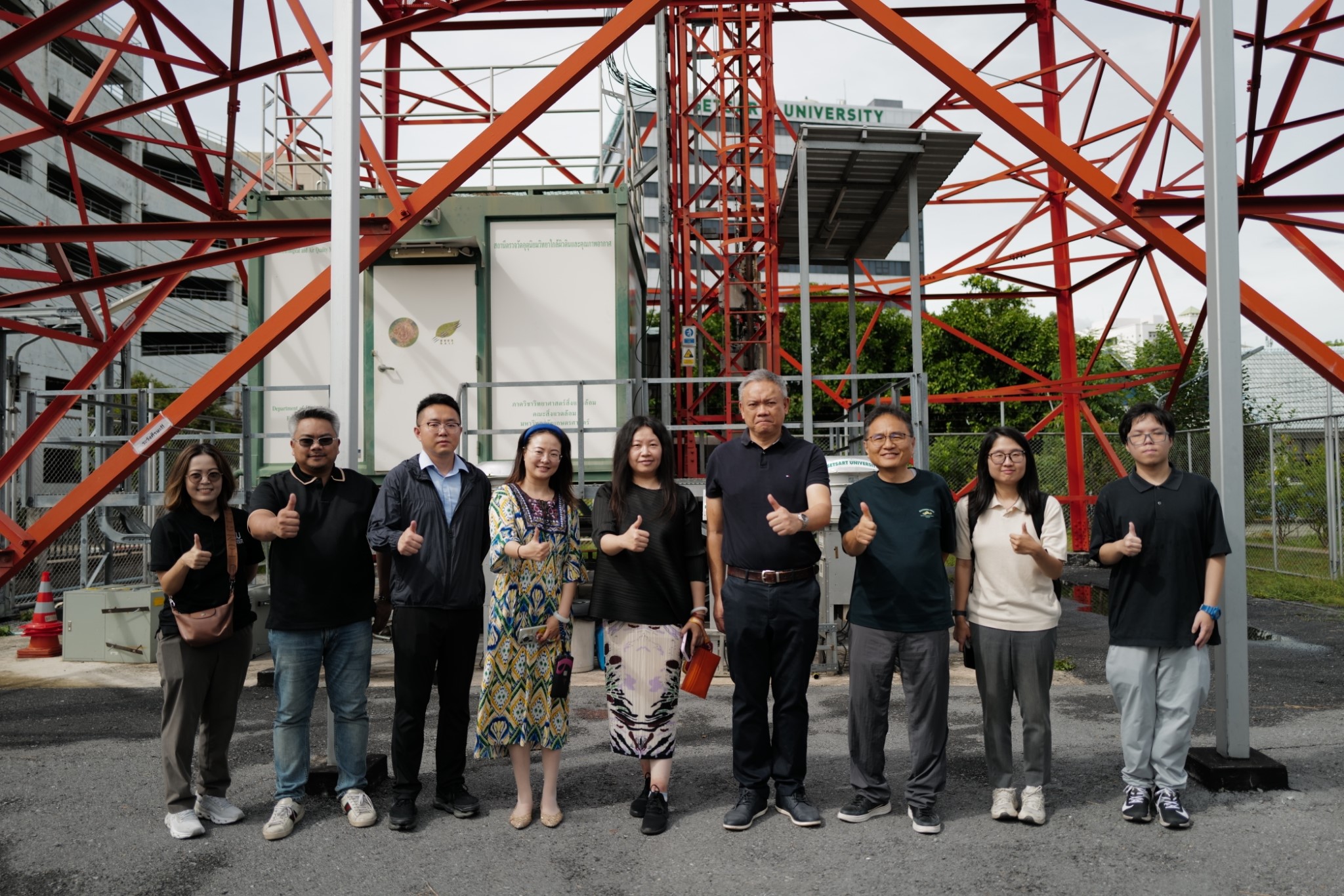
Dr. Hu Jingnan presented China’s notable achievements and practical experience in improving ambient air quality. Ms. Wu Jieyun, Chinese Deputy Director of the China‑Korea Environmental Cooperation Center, and Mr. Chang Lim‑Seok, Korean Deputy Director, jointly outlined the top‑level design and operational mechanisms of bilateral cooperation on air environment, highlighting tangible outcomes from flagship initiatives such as the Blue Sky Plan 2021 Work Programme. Associate Professor Surat Bualert of Kasetsart University reported on recent progress in China‑Thailand collaboration, including the “Clean Air for Bangkok” project and the jointly established Bangkok Atmospheric Environment Supersite, developed by CRAES and Kasetsart University.
Multilateral Engagement and Regional Platform Impact
Representatives from Mongolia’s NEACAP Science and Policy Committee, along with delegates from the UNESCAP Environment and Development Division, the International Centre for Integrated Mountain Development (ICIMOD), the UN Environment Programme (UNEP) Regional Office for Asia and the Pacific, the Deutsche Gesellschaft für Internationale Zusammenarbeit (GIZ), and the Clean Air Fund, actively participated in discussions. The event comprehensively demonstrated the cooperative governance achievements between China and the Republic of Korea, as well as the tangible contributions of science‑and‑technology exchanges with neighbouring countries toward improving regional air quality. The session received high appreciation from all attendees and provided a strong foundation for continued collaborative action on air environment governance among neighbouring states.
About NEACAP and China’s Role
Established in October 2018 under the North‑East Asian Subregional Programme for Environmental Cooperation (NEASPEC), NEACAP aims to build a strategic cooperation platform that integrates science, technology, and policy to jointly prevent and mitigate the environmental and health impacts of air pollution. Designated by China’s Ministry of Ecology and Environment (MEE), CRAES serves as China’s Technical Centre under the NEACAP framework. Dr. Hu Jingnan and Dr. Lei Yu, Chief Engineer of the Chinese Academy of Environmental Planning (CAEP), are members of the NEACAP Science and Policy Committee, continuously advancing collaboration within this mechanism.
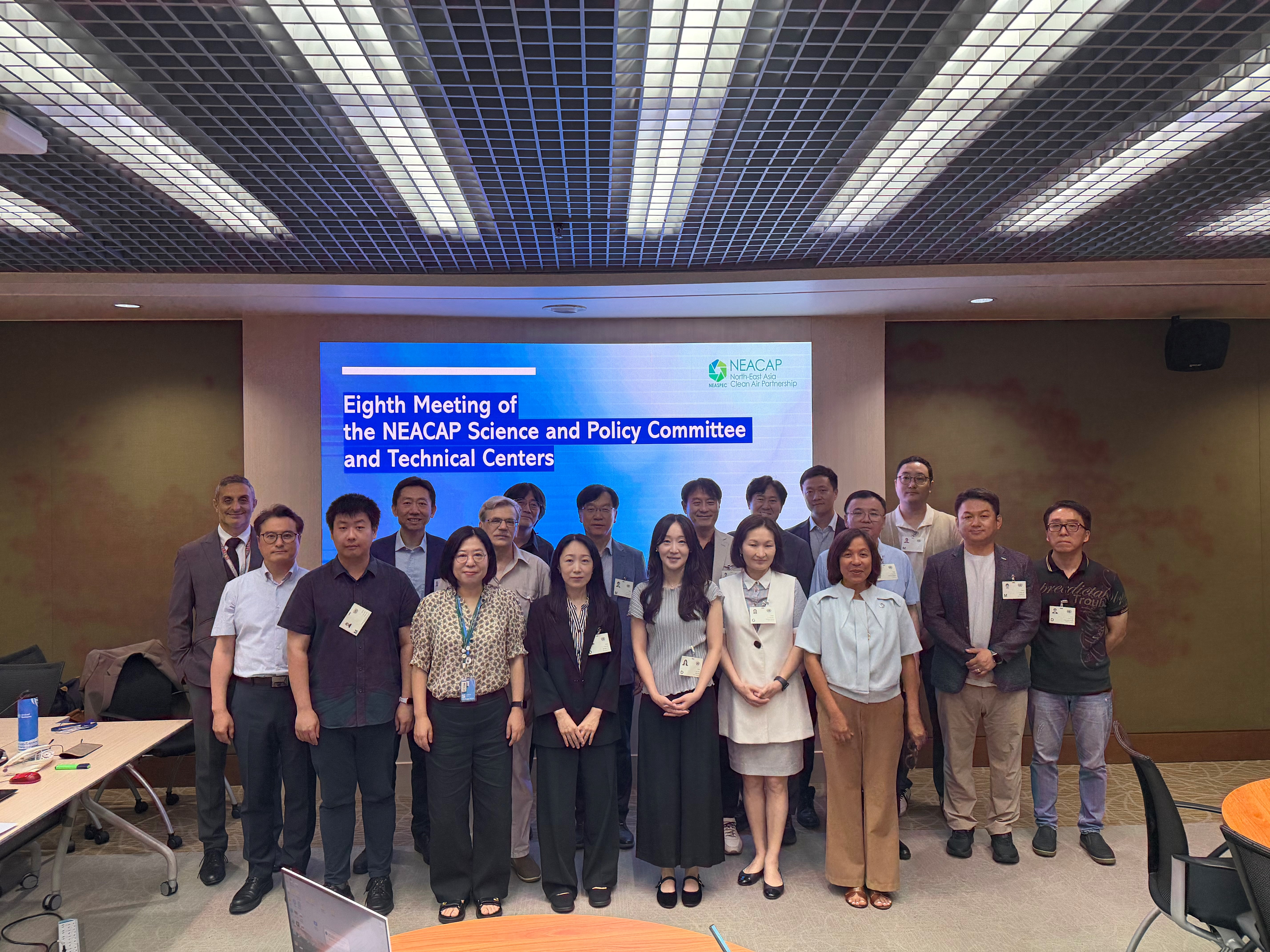
During their visit to Thailand, the Chinese delegation also attended the Eighth Meeting of the NEACAP Science and Policy Committee and Technical Center, and held bilateral exchanges with Kasetsart University on future air environment cooperation.
The side event gathered approximately 50 representatives from government agencies, research institutions, and international organisations across the Asia‑Pacific region. Staff from CRAES’s International Cooperation Center, Institute of Atmospheric Environment, and China‑Korea Environmental Cooperation Center, together with colleagues from CAEP, participated in the mission.